
Nine Student Pharmacists Receive 2026-2027 Wagner Family Pharmapreneurship Scholarships
Recipients will develop innovative ideas into practical solutions that improve patient care through the School’s pharmapreneurship initiative.
By Pam Carder
August 18, 2026
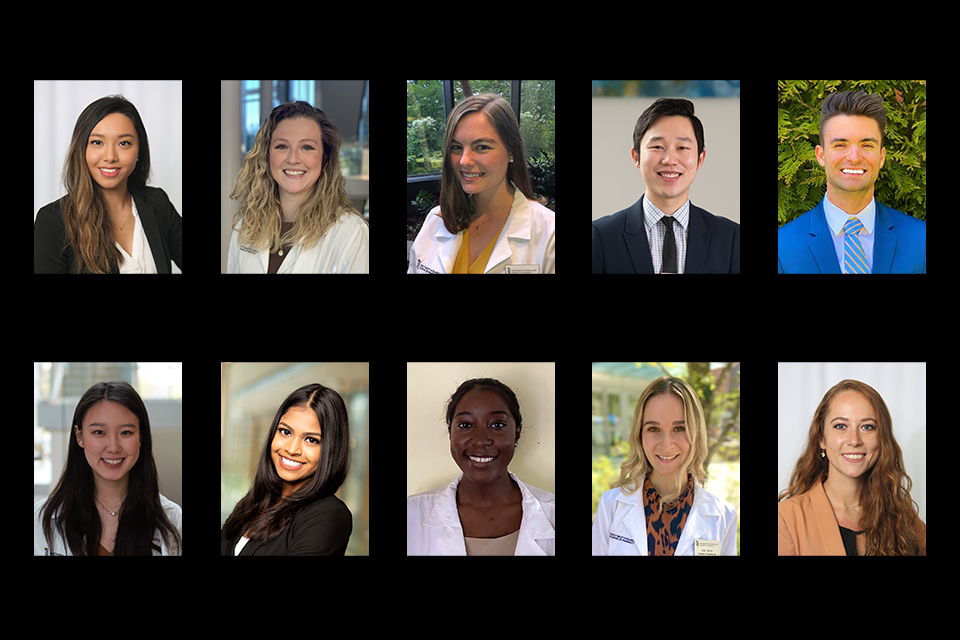
Nine student pharmacists at the University of Maryland School of Pharmacy (UMSOP) have been selected to receive Wagner Family Scholarships for the 2026-2027 academic year, in support of their interest in pharmapreneurship and their innovative ideas for sustainable solutions to improve health care.
Established in 2020 by Daniel E. Wagner, JD, the scholarships honor his family’s legacy at UMSOP, which includes nine graduates, and recognize students whose innovative ideas address real-world health care challenges through entrepreneurship, critical thinking, and patient-centered problem solving.
The Wagner Family Scholarships support the School’s Pharmapreneurship initiative, which encourages student pharmacists to transform innovative ideas into sustainable solutions that improve health care. Through the program, recipients further develop their projects using the Decision-Information-Analysis (DIA) Critical Thinking Program, strengthening their ability to analyze complex challenges and create meaningful value for patients and the profession.
Joga Gobburu, PhD, MBA, the Felix Gyi Endowed Memorial Professor in Pharmapreneurship at UMSOP and a professor in the Department of Practice, Sciences, and Health Outcomes Research who leads the School’s Pharmapreneurship initiative, says the scholarship recognizes students with the potential to transform innovative ideas into meaningful change.
“Pharmapreneurship begins with recognizing opportunities to create value where others see obstacles,” said Gobburu. “This year’s scholarship recipients have demonstrated the vision and determination to tackle complex health care challenges, and we look forward to helping them develop those ideas into solutions that can improve patient care and advance the profession.”
Scholarship recipients proposed projects spanning medication safety, artificial intelligence, patient access, pharmacy operations, clinical education, and health communication.
- Klaudia Antoniak will explore an AI-driven medication adherence monitoring platform that uses smartphone technology to support chronic disease management and enable more proactive pharmacist interventions.
- Rabia Asjid will evaluate whether informed consent forms accurately communicate the purpose and expected benefits of clinical trials and develop recommendations to improve patient understanding and ethical decision-making.
- Steve Bedair will develop a shared private-label pharmaceutical and supplement platform to help independent pharmacies launch compliant private-label products through centralized regulatory, manufacturing, and logistics
- Whitney Frederic will develop a pharmacist-centered pharmacovigilance framework to strengthen adverse drug event reporting, improve communication among health care stakeholders, and enable earlier detection of medication safety concerns to support more effective regulatory decision-making.
- Kunj Patel will design a regulated educational content marketplace that allows health care educators to share specialized instructional materials while helping schools address faculty shortages and curriculum gaps.
- Nimrat Sangha will investigate an AI-enabled monitoring approach to identify safety and compliance risks associated with the online marketing and distribution of GLP-1 medications.
- Michele Ornella Simo Tchomgue will create an adaptive clinical decision-support tool to help pharmacy students make accurate and efficient therapeutic decisions during time-constrained patient encounters.
- Chinaza Udeichi will design a Unified Medication Record, a secure patient-centered digital platform that provides patients and authorized health care providers with a comprehensive, real-time medication profile to improve care coordination, reduce medication errors, and support safer medication use across health care settings.
- Janet Zhang will develop a proactive insurance verification and medication access system that helps patients and pharmacies resolve insurance coverage issues before prescription pickup.
For Antoniak, the Wagner Family Scholarship provides an opportunity to further develop an idea that combines artificial intelligence with pharmacy practice. Her project explores how smartphone technology could help pharmacists move beyond traditional dispensing models toward proactive, real-time medication adherence monitoring.
“I am particularly excited about the opportunity to further enhance my skills in pharmapreneurship through the Decision-Information-Analysis (DIA) Critical Thinking Program,” says Antoniak. “By teaching students to think critically and adaptively, UMSOP is empowering future pharmacists to solve systemic health care challenges, embrace emerging technologies, and drive meaningful innovation in patient care.”
Sangha’s project was inspired by the rapid growth of GLP-1 medications through telehealth and direct-to-consumer platforms and the need to ensure that expanded access is accompanied by strong patient protections. Her proposal explores whether AI-supported monitoring could help identify high-risk online platforms earlier, supporting safer and more transparent medication use.
“Access should not come at the expense of safety,” says Sangha. “The goal is not to limit access, but to think about how pharmacists, technology, and regulatory oversight can work together to make access safer, more transparent, and more accountable.”
Related News Stories

UMSOP Announces Recipients of Two Prestigious Scholarships
July 9, 2025
The Gyi and Wagner Scholarships support student pharmacists interested in pharmapreneurship.
UMSOP Announces Recipients of Two Prestigious Scholarships
August 18, 2022
The Gyi and Wagner Scholarships support student pharmacists interested in pharmapreneurship.

Scholarships Fuel Students’ Passions
August 16, 2022
The University of Maryland School of Pharmacy, and especially its students, are fortunate to have alumni who are eager to give back. Here are some of their stories.