
First-in-class Dual HIF Inhibitors Eliminate Multiple Tumor Types in Mice when Combined with Immunotherapy
Findings from UMSOP researchers and collaborators point to a promising new strategy for treating a broad range of cancers.
By Adapted from a press release by Ben Short, Rockefeller University Press
April 8, 2026
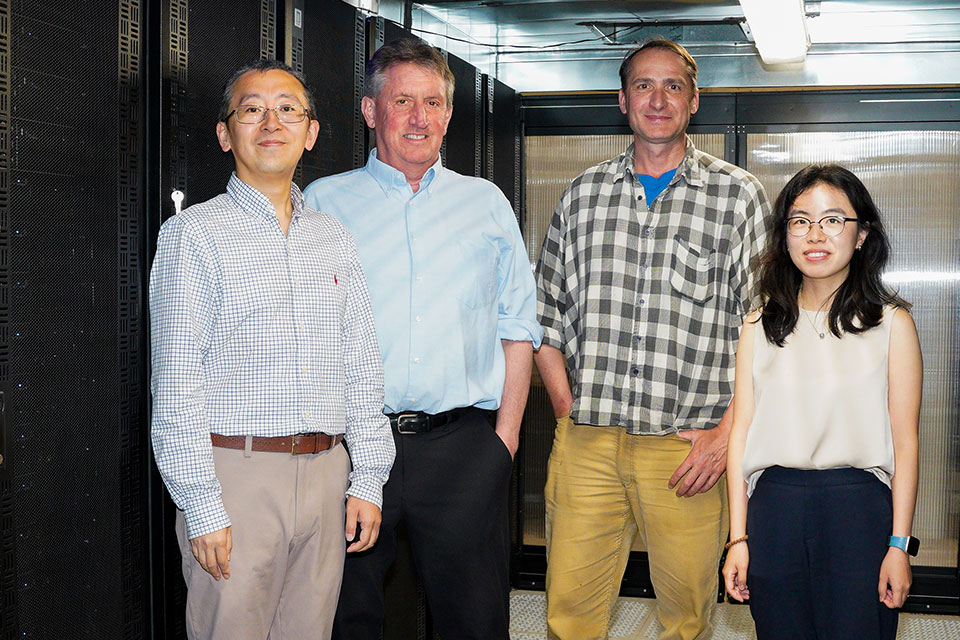
Pictured left to right: Wenbo Yu, Alexander MacKerell, Jr., Ronald Kasl, and Yiling Nan of UMSOP’s CADD Center
Researchers at the University of Maryland School of Pharmacy, in collaboration with Johns Hopkins University, have developed a novel class of drugs that target key drivers of cancer progression and, when combined with immunotherapy, eliminated multiple types of tumors in preclinical models.
A central component of this discovery was the work of Alexander MacKerell Jr., PhD, Grollman-Glick Professor of Pharmaceutical Sciences, and his group within the School’s Computer-Aided Drug Design Center, of which he is director. Using SILCS, a structure-based computational approach, the team identified small molecules capable of binding to both hypoxia-inducible factors 1 and 2 (HIF-1/2) – transcription factors widely considered “master regulators” of cancer progression.
“The SILCS approach enabled the selection of compounds with a high probability of binding to HIF-2, allowing experimental efforts to focus on testing hundreds, rather than millions, of chemical compounds,” MacKerell says. “This significantly accelerated the drug discovery process.”
The study, published April 2 in the Journal of Experimental Medicine, shows that these dual inhibitors, when combined with immune checkpoint inhibitors, can completely eliminate breast, colorectal, melanoma, and prostate tumors in mice. Notably, treated animals remained tumor-free even after being rechallenged with new tumor cells.
Targeting master regulators of cancer
Hypoxia-inducible factors 1 and 2 (HIF-1/2) play a central role in cancer progression by regulating hundreds of genes involved in tumor growth, survival, and metastasis. These proteins also promote blood vessel formation and suppress immune responses, limiting the effectiveness of immunotherapies.
HIF-1/2 activity increases under low-oxygen (hypoxic) conditions – commonly found in rapidly growing tumors – and is strongly associated with poor patient outcomes. While the HIF-2 inhibitor belzutifan has shown clinical success, targeting both HIF-1 and HIF-2 simultaneously may offer a more effective therapeutic strategy.
“Dual HIF-1/2 inhibition presents a promising therapeutic strategy, particularly for cancers characterized by hypoxia or resistance to conventional therapies,” says Gregg L. Semenza, MD, PhD, professor of genetic medicine, pediatrics, radiation oncology, and molecular radiation sciences, biological chemistry, medicine, and oncology at the Johns Hopkins University School of Medicine, co-senior author of the study.
From computational discovery to biological validation
Building on the compounds identified by MacKerell’s team, researchers at Johns Hopkins, led by Semenza and first author Shaima Salman, PhD, associate research fellow at Johns Hopkins University School of Medicine, tested candidate molecules in a range of cancer models.
The team identified several compounds that bind to both HIF-1 and HIF-2, triggering their degradation and preventing activation of cancer-promoting genes.
“These compounds showed broad and potent HIF inhibitor activity in a variety of cancer cell lines,” Salman says.
In mouse models, the drugs alone inhibited tumor growth across multiple cancer types, reducing vascularization and limiting invasiveness.
Enhancing the power of immunotherapy
The most striking results were observed when the dual inhibitors were combined with immune checkpoint inhibitors such as anti-CTLA-4 or anti-PD1. More than half of treated mice experienced complete tumor remission, including cases resistant to immunotherapy alone.
Researchers also found that the treatment reshaped the tumor microenvironment – reducing immunosuppressive cells while increasing tumor-killing T cells and natural killer (NK) cells.
In addition to their effectiveness, the compounds can be administered orally and showed no safety concerns in mice, even at doses well above therapeutic levels.
“We saw an increased response to immune checkpoint inhibitors across a broad sampling of cancer types,” Semenza says. “This suggests the combination could have widespread clinical utility.”
Related News Stories
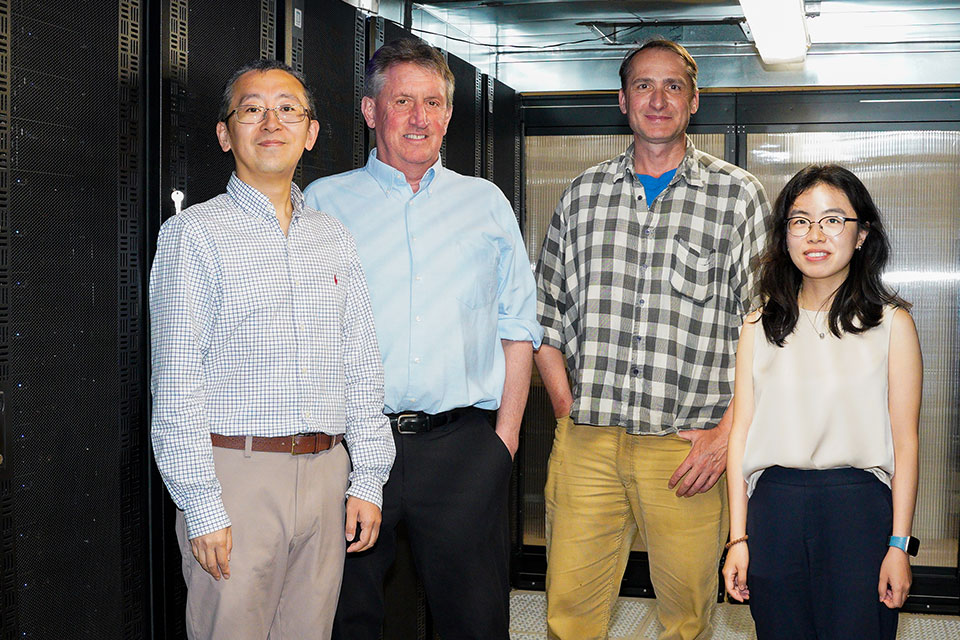
How the CADD Center Accelerates Drug Design
September 29, 2025
Computer modeling finds the most promising compounds and guides their transformation into drugs.
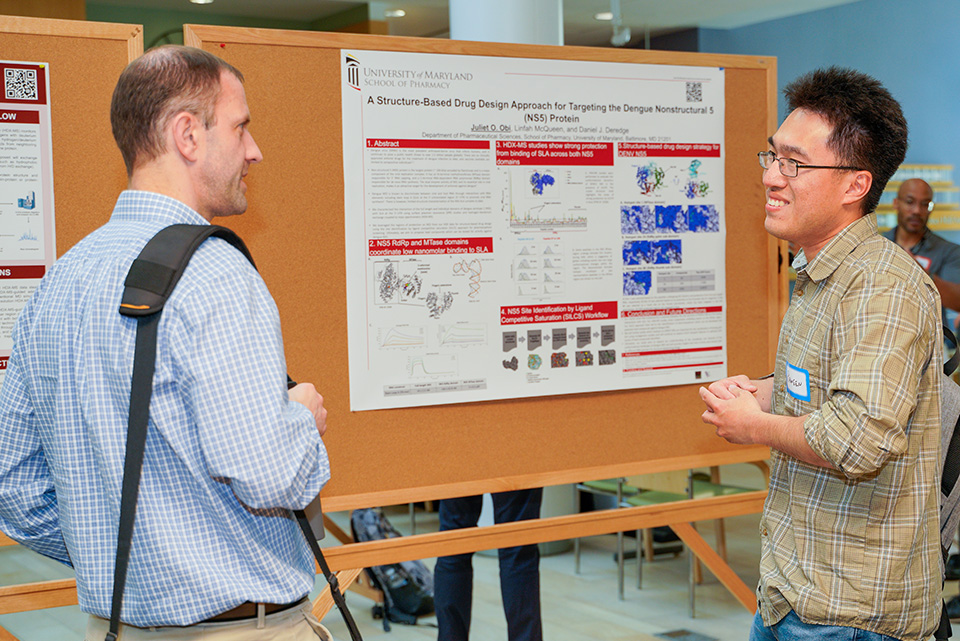
Symposium Brings Computer-Aided Drug Design Experts Together
June 29, 2023
More than 200 attendees joined in person or virtually for biannual event.

Computational Modeling Advances Research in Asthma Treatment
December 6, 2022
PSC professor Alexander MacKerell leads the Computer-Aided Drug Design Center.