
More Than Numbers
McPherson’s dogged pursuit brings consistency and safety to opioid conversion calculations.
By Robyn Fieser, as published in Capsule, Spring 2026
July 7, 2026
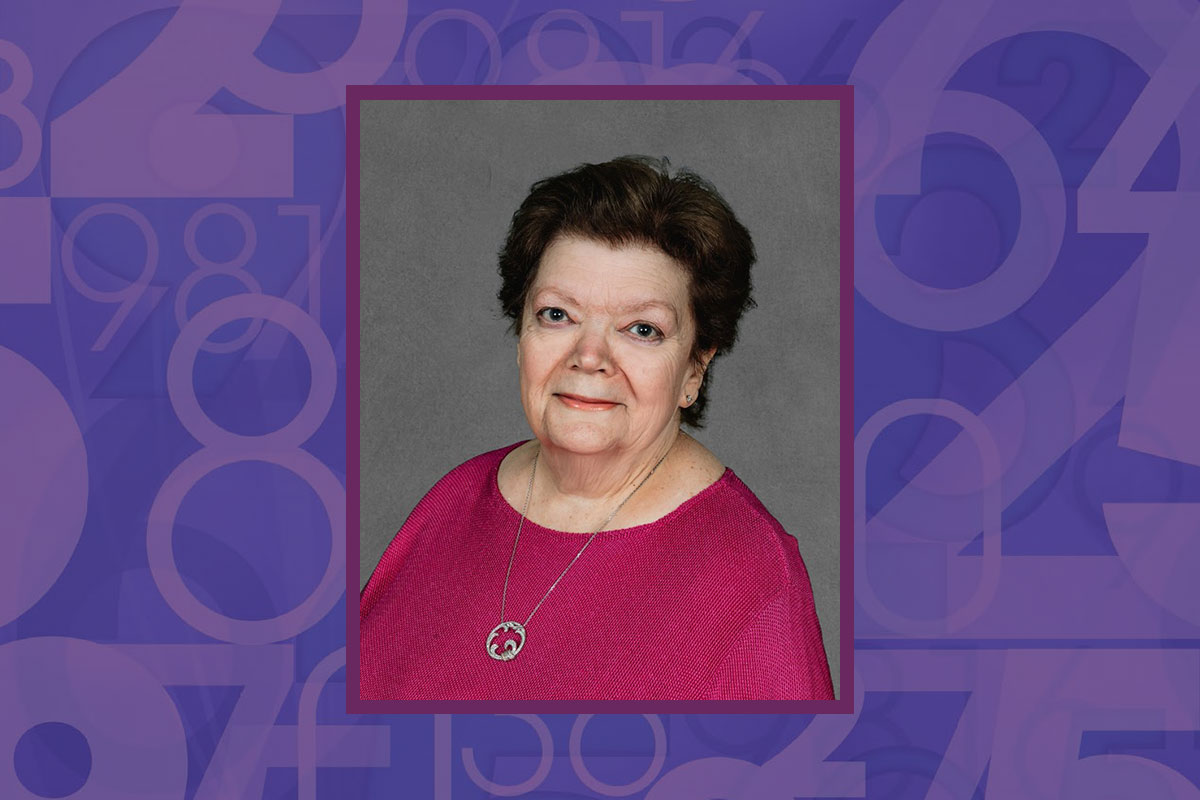
Image: Mary Lynn McPherson
In hospice and palliative care, few clinical tasks create as much angst as opioid conversion calculations. When done well, it can help seriously ill patients cope with pain in a dignified and comfortable way. Done poorly, it can lead to uncontrolled pain, toxicity, or even overdose.
At its core, an opioid conversion asks clinicians to switch a patient from one opioid regimen to another. Whether it be to help control pain, minimize side effects or combat opioid intolerance, clinicians must decide, often with incomplete information, what dose will relieve suffering without causing harm. It is a decision that has long been guided by equianalgesic tables built from limited data and applied with a level of certainty the evidence does not always support.
That gap between high-stakes decision-making and shaky evidence has now narrowed.
In January 2025, leading oncology and palliative care organizations released a multi-national consensus statement on opioid conversion in adults with cancer, offering clinicians a shared, evidence-informed framework for a practice long marked by variation and uncertainty.
For more than a decade, Mary Lynn McPherson, PharmD ’86, PhD, BCPS, FAAHPM, helped lay the groundwork for this moment. A professor in the Department of Practice, Sciences, and Health Outcomes Research at the University of Maryland School of Pharmacy (UMSOP) and a palliative care pharmacist, McPherson has worked to make opioid conversion calculations safer by steering the field away from rote calculation toward informed clinical judgment. She developed an opioid conversion table grounded in real-world practice and devised a five-step process that asks clinicians to look beyond the numbers and truly see their patients.
She also worked with other experts to lead the comprehensive scoping review that underpinned the new guidance, with results that closely mirror the approach she has advanced for years. Endorsed by organizations including the American Society of Clinical Oncology (ASCO), the American Academy of Hospice and Palliative Medicine (AAHPM), the Multinational Association of Supportive Care in Cancer (MASCC), the Hospice and Palliative Nurses Association (HPNA), and the National Interdisciplinary Consortium for Supportive Care in Oncology (NICSCO), the consensus statement represents something rare in palliative care: a shared framework clinicians can trust.
“I am very proud, and I am especially pleased we are moving toward an evidence-based approach,” says McPherson.
More Common Than You Think
It is estimated that one in three cancer patients will need an opioid rotation. These conversions happen for many reasons. A medication that once worked may stop working. A patient may no longer be able to swallow tablets or capsules. Organ failure (kidney or liver), allergies, or disease progression can all make an opioid rotation necessary.
The risk in the conversion lies in the margin. Doses that are too high can cause over-sedation or even overdose. Doses that are too low can leave the patient in pain. Historically, many conversion ratios came from drug-specific studies or pharmaceutical package inserts designed to protect patients from overdosing on a single medication. But a comprehensive guide to safely transition across an entire class of drugs did not exist. The result was often an overly conservative starting dose that protected against toxicity but left patients suffering.
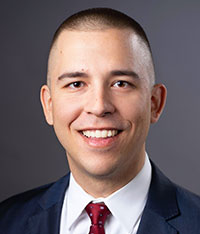
Ryan Constantino
“You don’t want to overdose somebody,” says Ryan Costantino, PharmD, MS ’20, PhD ’25, an Army pharmacist who teaches advanced pain management and has worked closely with McPherson as a student in UMSOP’s MS in Palliative Care program and its PhD in Pharmaceutical Health Services Research program. “But the challenge is that to not overdose, it could mean that you’re in pain. It’s always a tradeoff.”
When pain is not controlled, Costantino says, patients often respond in deeply human ways. They may take extra tablets or combine medications, seeking relief.
“That’s when sometimes they take two, they take three, they forget the last time they took one,” he says. “A lot of what we see is people become over-sedated, or an overdose is honestly just a very human reaction to their suffering.”
That tension — treating pain aggressively enough to relieve suffering, but carefully enough to avoid causing harm — has long been at the center of opioid conversions. It is also a problem McPherson has encountered repeatedly in her own clinical work providing hospice and palliative care. She saw how easily uncertainty could creep in, and how quickly clinicians were forced to make high-stakes decisions with imperfect tools.
“The whole practice of opioid calculations, it’s not just numbers.” she says.
Booking A Solution
Even small clinical changes can dramatically alter how an opioid behaves in the body. Potency varies from drug to drug. Route of administration matters. As does frequency. “How often you give it, how you give it. It all depends on how it gets into your bloodstream,” McPherson says. In palliative care, where patients may move from home to hospital, from oral medications to intravenous infusions, those shifts are common and sometimes urgent.
By the early 2000s, McPherson began searching for clearer, more practical guidance for her own patients, but she found little. “I kept looking for the literature,” she says. “And finally someone said, ‘I think you will have to write a book.’”
That’s what she did. The first edition of Demystifying Opioid Conversion Calculations was published in 2009, followed by a second edition in 2018. A third edition is forthcoming this year. It includes opioid conversion tables drawn from the best available evidence, but McPherson is explicit about their limits.
The numbers are meant to guide, not dictate clinical decisions. “When people see a chart with numbers, they think it’s set in stone,” she says. “The chart is important, but it’s not just the number.”
From the outset, she published her tables within a five-step framework designed to slow clinicians down, beginning with an assessment of the patient’s pain and side effects, followed by cautious calculations, conservative adjustment, and close, ongoing reassessment.
McPherson often jokes that she is a “card-carrying weenie” when it comes to being overly aggressive with scheduled opioid doses. The caution, she says, is intentional. “It’s the very, very best that you can do,” she says of opioid conversion, “but it’s the process.”
“I don’t care whether you use an equianalgesic chart or a multiplier, or a divisor really, this kind of a calculation just gets you in the ballpark and once you’re there you have to figure out which of the 40,000 seats are yours,” she says.
That approach would go on to shape not only her teaching and writing, but the broader evidence base that followed.
The Quest for Reliability
Over time, McPherson’s questions about uncertainty grew more formal and more urgent. Conversion tables were everywhere, but they mostly didn’t agree. Most of them were based on small studies, single-dose trials, or assumptions that did not hold up in real-world palliative care. And yet the numbers were treated as fixed truths.
In 2023, a small group of clinicians and researchers decided to take a harder look. “A couple of years ago, a palliative care physician said the whole thing was stupid,” McPherson recalls, laughing. “And that was kind of the moment.”
What followed was a deep dive into the literature to understand not just what ratios were being used but how reliable they were.
That resulted in a comprehensive scoping review examining opioid conversion calculations across decades of published studies. The review analyzed more than 200 randomized and non-randomized trials, a body of evidence that had never been systematically examined in one place.
It found wide variability, modest evidence strength, and no single “right” answer. “Bottom line,” McPherson says, “there is not one right answer.”
That reality shaped what came next. Using the findings of the scoping review as a foundation, an international expert panel that included McPherson convened under the leadership of five major professional organizations: MASCC, ASCO, AAHPM, HPNA, and NICSCO. Through a formal, modified Delphi process, experts from multiple countries evaluated proposed statements and voted anonymously, with a 75 percent agreement threshold required for inclusion in the guidelines.
The result was Opioid Conversion in Adults with Cancer, a multi-national consensus guideline jointly endorsed by the five organizations in 2025.
What emerged from the process was intentionally imperfect. Where the evidence was strong, the guidelines offer clear conversion ratios. Where it wasn’t, the panel resisted the urge to manufacture certainty and kept ranges instead. The goal was not to eliminate clinical judgment, but to anchor it in the best available evidence.
“Having a consistent table informed by the highest level of evidence is incredibly important,” says Akhila S. Reddy, MD, a professor and section chief of palliative and supportive care in the Department of Palliative, Rehabilitation, and Integrative Medicine at the University of Texas MD Anderson Cancer Center. Reddy served on the guideline’s steering committee. “It helps promote consistency in practice and patient safety across the world.”
Hitting the Mark
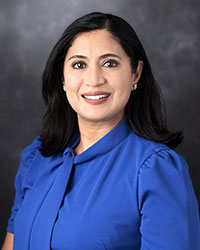
Akhila Reddy
Reddy’s own research reinforced the need for the shared framework. In 2021, she conducted an international survey of more than 400 clinicians from 53 countries to examine how opioid conversions were being handled in practice. The results revealed wide and unsettling variation in conversion approaches, even among experienced clinicians. For Reddy, the findings underscored the risks created by inconsistency. It also helped drive momentum toward a consensus-based approach grounded in the strongest available evidence.
What surprised many on the panel, Reddy notes, was how closely the final consensus aligned with the conversion ratios McPherson had already been teaching and publishing for years. As the evidence was reviewed and the ranges refined through the Delphi process, McPherson’s tables repeatedly landed squarely in the middle of what the literature and the expert panel supported, reinforcing her approach had been right all along.
That reassurance was deeply satisfying.
“When I saw that my numbers landed right in the middle of the evidence, I was thrilled,” McPherson says. “I did a happy dance for three days straight. But what mattered most wasn’t about being ‘right.’ It was seeing the field move toward an evidence-based approach. It’s not about the very, very best number, it’s about process.”
These days, McPherson says, the pace of the work has only accelerated. Health systems around the country have started embedding her opioid conversion chart directly into their electronic medical records. Even more gratifying, she says, the American Academy of Hospice and Palliative Medicine — the field’s central professional organization — has adopted her chart across its educational materials.
Meanwhile, McPherson is wrapping up two consecutive three-year terms on AAHPM’s board of directors, where she made history as the first non-physician elected to serve. Her teaching continues. At the organization’s annual meeting in March 2026 in San Diego, she and longtime collaborator Mellar Davis, MD, FCCP, FAAHPM, a palliative care specialist, led a two-hour session titled “Deep Dive Opioid Conversion Calculations and Breakthrough Pain: Innovation Informing the Art and Science.”
For McPherson, the moment feels less like a culmination than a confirmation that years of careful thinking, a good dose of humility around uncertainty, and even a little humor can still move the field forward. The math may never be perfect. But it’s firmly in the ballpark.
Related News Stories
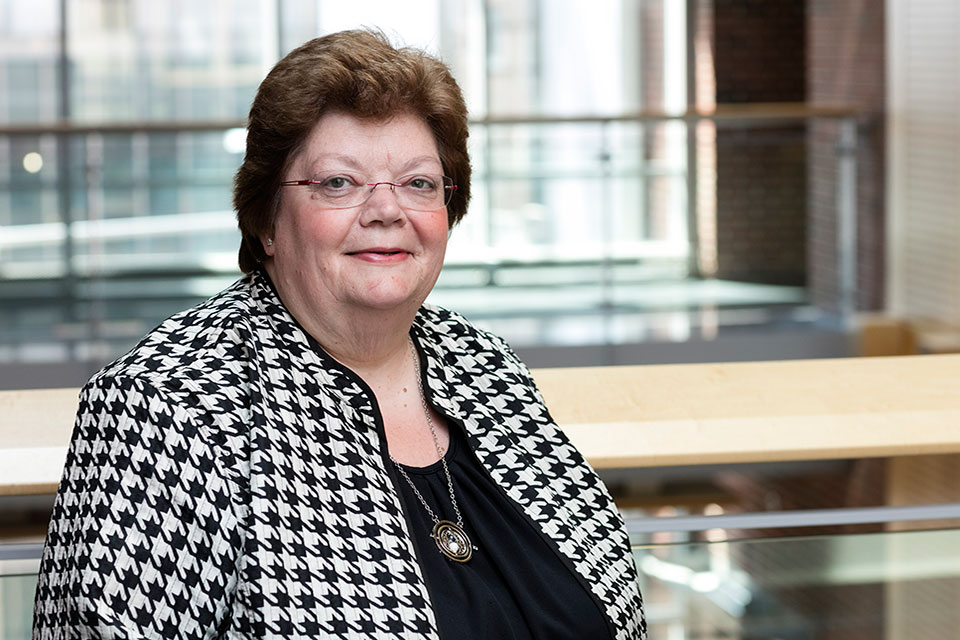
McPherson Receives Awards for Palliative Care Work
October 16, 2023
Mary Lynn McPherson is executive director of the Graduate Studies in Palliative Care program.
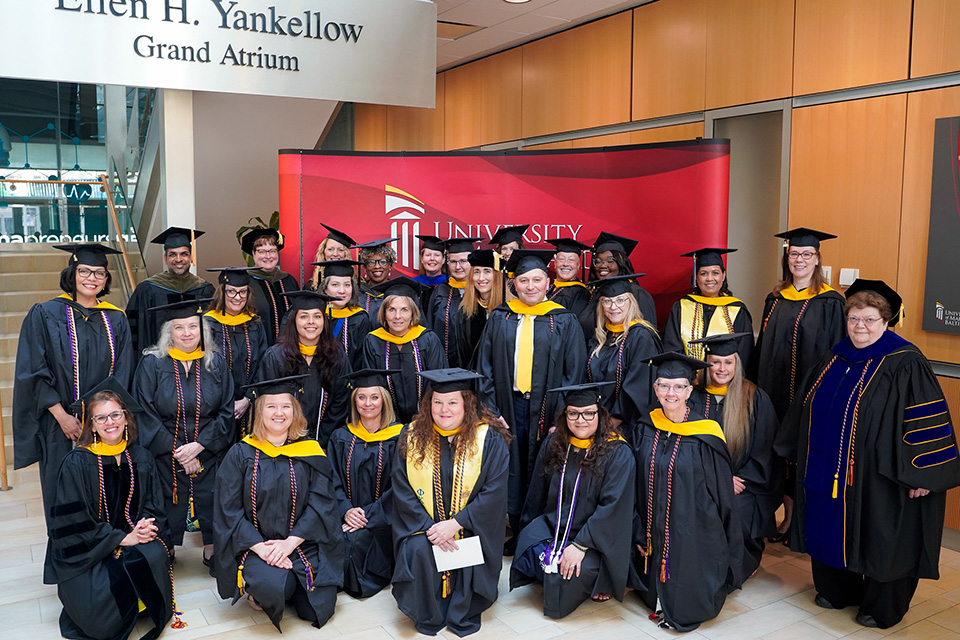
Palliative Care Graduate Program Celebrates 2023 Convocation
August 28, 2023
Graduating class is the largest in the program’s history.

Practice Faculty Earn Fellow Status from the American Academy of Hospice and Palliative Medicine
December 14, 2021
McPherson and Walker are the first pharmacists to receive fellow designation from 5,500-member professional organization