
Hongbing Wang Named UMB Distinguished University Professor
Honor recognizes Wang’s internationally influential research in drug metabolism and liver disease, as well as his leadership, teaching, and mentorship at the University of Maryland School of Pharmacy.
By Becky Ceraul
May 18, 2026
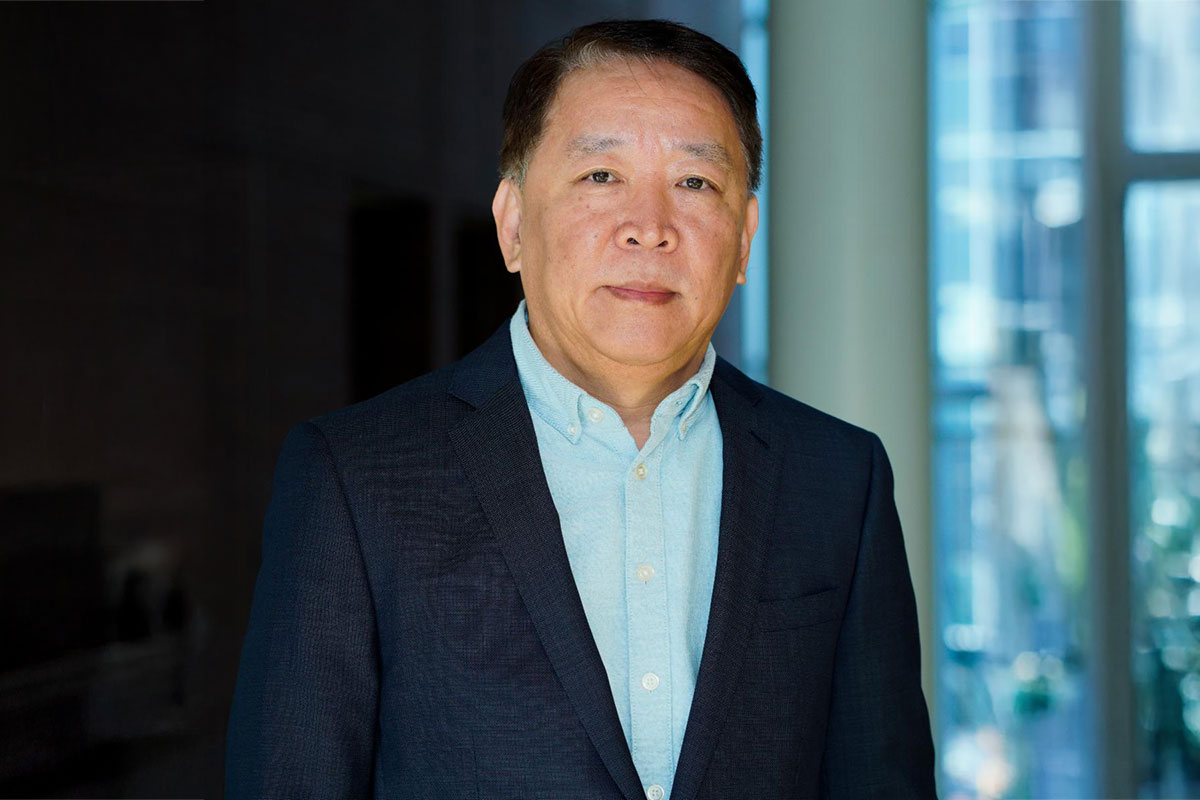
Hongbing Wang, PhD, professor and interim chair of the Department of Pharmaceutical Sciences (PSC) at the University of Maryland School of Pharmacy, was named a University of Maryland, Baltimore (UMB) Distinguished University Professor, the highest appointment bestowed on a faculty member at UMB.
In his letter announcing the six faculty appointments, UMB President Bruce E. Jarrell, MD, FACS said: “It is a recognition not just of excellence, but also of impact and significant contribution to the nominee’s field, knowledge, profession, and/or practice. I’m extremely proud of the exceptional and transformational contributions each of these faculty members has made in support of UMB’s mission to improve the human condition and serve the public good. They are excellent examples of living the UMB core values, and it is my honor to call them colleagues.”
“Dr. Wang is an internationally recognized leader in drug metabolism, xenobiotic receptors, and drug-induced liver injury,” said Sarah L.J. Michel, PhD, dean of the School of Pharmacy and professor of PSC. “His work has reshaped how we understand and predict drug response and toxicity. He is also a sought-after teacher, a dedicated mentor, and values service to the School, the University and his community.”
Wang’s research centers on how the liver “decides” whether a drug will help, harm, or simply pass through the body. His research program focuses on nuclear receptor proteins, including CAR, PXR, and AhR. During his career, he has identified how these molecular sensors drive drug bioactivation, detoxification, and toxicity. His work has revealed mechanisms that underlie drug-drug interactions, metabolic liver disease, and hepatocellular carcinoma, and has directly informed the evaluation of drug-induced liver injury. He has made numerous important discoveries on how drugs are metabolized. This includes his discovery that activation of human CAR can enhance the efficacy of cyclophosphamide-based chemotherapy while reducing doxorubicin-induced cardiotoxicity. This was a paradigm-shifting concept for patients with lymphoma and triple-negative breast cancer. His research findings also have led to real world translational work, including the development of several highly selective CAR activators, that are under consideration as novel therapeutics.
Wang’s research program also spans translational toxicology and regulatory science. His work on SLC13A5 and hepatic energy homeostasis has opened new avenues in liver cancer biology and metabolic disease. His studies of microbiota-derived and dietary metabolites acting through CAR and PXR have revealed unexpected pathways that maintain gut–liver homeostasis. During the COVID-19 pandemic, his mechanistic dissection of remdesivir-induced hepatotoxicity and the protective role of dexamethasone had immediate relevance for patient care and regulatory decision-making.
Wang has published more than 120 peer-reviewed articles in highly selective, field-defining journals. His research program has been continuously funded by the National Institutes of Health (NIH) and the U.S. Food and Drug Administration (FDA), including multiple R01 grants and major FDA U01 and supplement awards. He has received patents on CAR activators and advanced liver-on-a-chip platforms.
Wang is also deeply committed to education and mentoring, teaching in the School’s PharmD program and several of its PhD and MS programs. “One of his notable and most popular contributions to teaching is his course in pharmacogenomics, which is offered to both our PharmD and PhD students,” said Michel. “A highlight of this course is the opportunity that each student has to sequence their own personal pharmacogenome, which offers a real-life example of precision medicine.”
Wang is also a dedicated mentor. He has trained more than 50 PhD students, postdoctoral fellows, and undergraduate researchers, along with numerous PharmD students. His trainees have gone on to leadership roles at the FDA, NIH, industry, and research universities, and they have earned highly competitive NRSA fellowships, PhRMA Foundation awards, ORISE fellowships, and institutional merit awards.
Throughout his time at UMB, Wang has held numerous leadership roles, including serving as interim chair of PSC since 2023. In this role, he has guided a large, diverse department and program through challenging funding climates, supported outstanding faculty, and fostered collaborations across the School of Pharmacy and other schools at UMB to address pressing research questions. At the campus and national levels, he has served on and led key committees and review groups, including NIH and FDA study sections, National Science Foundation panels, and international funding agencies. His editorial board roles for Pharmaceutical Research, Acta Pharmaceutica Sinica B, Scientific Reports, and other journals reflect his reputation as a leading researcher.
Wang and five other UMB faculty members will receive their Distinguished University Professor medals at UMB’s Faculty Convocation on Sept. 17.
Related News Stories
UMSOP Faculty Awarded $2.8 Million NIH Grant to Improve Chemotherapy for Triple-Negative Breast Cancer
September 10, 2025
Researchers aim to improve chemotherapy by enhancing drug efficacy and reducing heart toxicity through dual activation of CAR and Nrf2 pathways.
UMSOP Faculty Awarded $3.4 Million NIH Grant to Develop Innovative Nanoparticle Immunotherapy for Sepsis
June 13, 2025
Researchers are developing a novel therapy using safe, drug-free nanoparticles to aid the body in fighting sepsis more effectively.
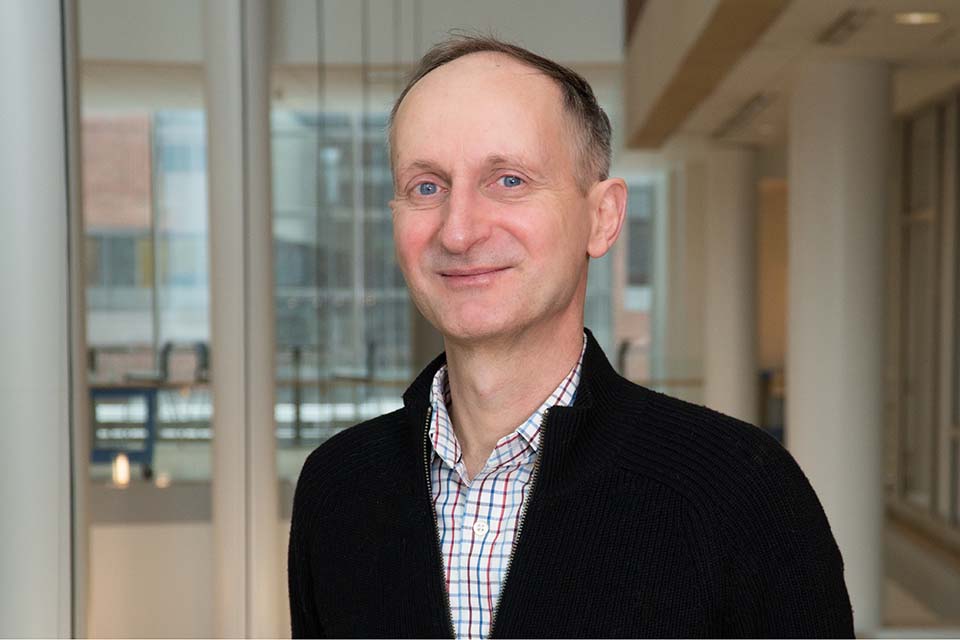
Peter Swaan Named Distinguished University Professor
May 18, 2022
Professor and chair of the Department of Pharmaceutical Sciences receives highest appointment for University of Maryland, Baltimore faculty.