
MPC Celebrates National Poison Prevention Week
Observed March 15-21, National Poison Prevention Week raises awareness of the dangers of poisonings and promotes steps that everyone can take to prevent them.
By Emily Paterson, MPH, CHES and Caroline Rodriguez
March 16, 2026
Since 1962, the third week of March has been celebrated by presidential decree as National Poison Prevention Week (NPPW), providing poison centers across the country — including the Maryland Poison Center (MPC) at the University of Maryland School of Pharmacy (UMSOP) — an opportunity to raise awareness about the dangers of poisonings and highlight steps that everyone can take to prevent them. This year, NPPW will be observed March 15-21, with the theme “When the Unexpected Happens, We’re Here for You 24/7.”
According to the Centers for Disease Control and Prevention (CDC), poisoning is the leading cause of unintentional injury death in the U.S., with most of these deaths caused by drug and medicine misuse and abuse. The MPC, part of UMSOP’s Department of Practice, Sciences, and Health Outcomes Research (P-SHOR), is a 24-hour telephone service that offers free, fast, and confidential expert advice about poisonings and overdoses. The MPC has provided poisoning treatment advice, education, and prevention services 1972 and is certified by the American Association of Poison Control Centers as a regional poison center for the state of Maryland and the District of Columbia.
“The MPC, along with the nation’s other 52 poison centers, recognizes Poison Prevention Week to draw special attention to the importance of poison safety practices as a way to decrease poisonings from happening,” says Angel Bivens, BS Pharm, MBA, CSPI, managing director of the MPC. “We view every week as poison prevention week. But when the unexpected happens, we have specially-trained pharmacists and nurses available 24/7 to provide customized help for callers’ specific situations — something searching the internet can’t do. All calls are free and confidential.”
Although approximately one-third of the calls received by the MPC involve children younger than six years old, teens, adults, and older adults are also at risk for poisoning.
To help prevent poisoning in your home, follow these tips from the MPC:
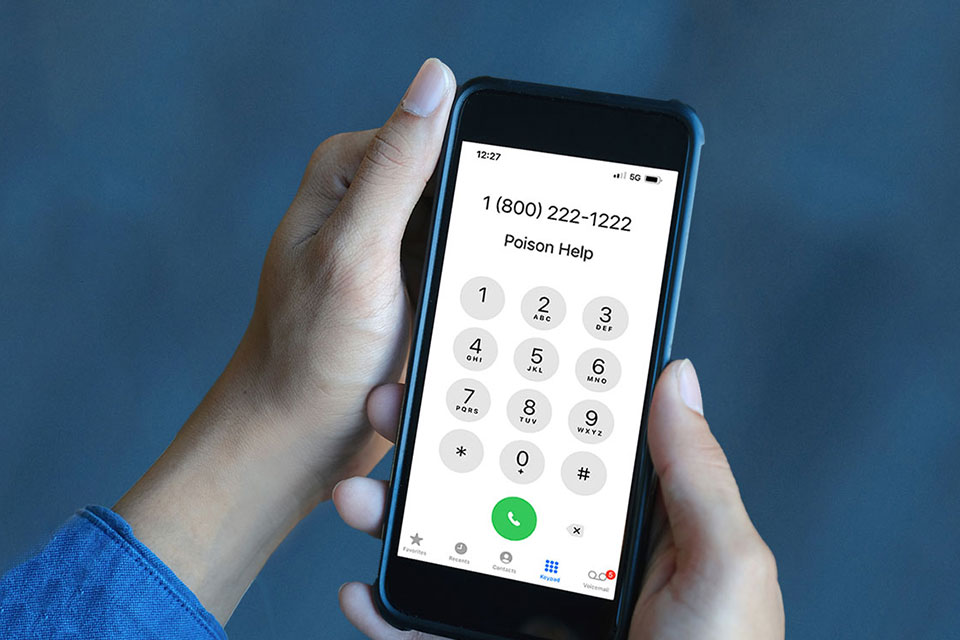
- Program the Poison Center phone number in your cell phone. Your local poison center can be reached anywhere in the United States by dialing 1-800-222-1222.
- Follow the Poison Safety Checklist to make sure all medicines, household products, and other poisons are stored up, away, and out of sight and reach of children and pets.
- Read and follow directions on the label before using medicines and household products.
- Keep all household products and medicines in their original containers. Never put chemicals or cleaning products in empty food or drink containers.
- Always ask for medicine in child-resistant containers and be sure to close it tightly after use; but remember that these containers are not child-proof. If given enough time, children can often open the safety caps.
- Put medicines away after each dose, even if they will be taken again in a few hours.
- Know the names of plants in and around your home and safely remove poisonous plants from the house and yard.
- Have at least one carbon monoxide detector in your home.
Families living in Maryland and the District of Columbia who would like more information about poison prevention can request a poison safety packet for their home. This packet contains information about poison safety, Mr. Yuk stickers, telephone stickers, and a magnet that can help families prevent or prepare for poisoning emergencies.
Related News Stories
Maryland Poison Center Celebrates National Poison Prevention Week 2021
February 28, 2021
Observed March 21-27, National Poison Prevention Week helps raise awareness about the dangers of poisonings and promotes steps that everyone can take to prevent them.
Maryland Poison Center Celebrates National Poison Prevention Week 2015
March 13, 2015
Maryland Poison Center will join poison centers across the country in celebrating National Poison Prevention Week March 15-21.
Maryland Poison Center Celebrates National Poison Prevention Week 2014
March 17, 2014
Maryland Poison Center will join poison centers across the country in celebrating National Poison Prevention Week March 16-22.