
UMSOP Faculty and Student Receive MPower Early Scholar Awards
The nearly $1.3 million in funding from the University of Maryland Strategic Partnership supports early-career researchers across all seven UMB schools.

By Jen Badie, originally published in the Elm. Edited by Becky Ceraul and Pam Carder.
March 31, 2026
Pictured: Adarsh Subbaswamy and Yu-Hua Fu
The University of Maryland, Baltimore (UMB) has awarded nearly $1.3 million to 29 graduate students, postdoctoral fellows, and junior faculty in the first two rounds of funding for the MPower Early Scholars Awards, created late last year to support researchers at UMB and the University of Maryland, College Park (UMCP) who have felt the direct impact of recent cuts to research funding.
The awards were given across multiple disciplines, with recipients in programs affiliated with all seven of UMB’s schools. A faculty member and a PhD student from the University of Maryland School of Pharmacy (UMSOP) were recipients for their projects on using artificial intelligence to detect cardiovascular disease and the epidemiology of high-risk medications in vulnerable populations.
At UMB, 15 graduate student awards were given across five schools totaling $487,500; four postdoctoral fellow awards were given across two schools totaling $300,000; and 10 junior faculty awards were given across five schools totaling $500,000.
“The MPower funding is an important investment in our early scholars,” said UMB Provost and Executive Vice President Roger J. Ward, EdD, JD, MSL, MPA. “We are responding to a critical need to protect our emerging scholars and guarantee that society continues to benefit from important discoveries that improve lives and the human condition.”
Adarsh Subbaswamy, PhD, assistant professor of practice, sciences, and health outcomes research at UMSOP, is leading a new collaboration between the UMSOP and the University of Maryland School of Dentistry. Supported by MPower funds, the project leverages artificial intelligence to detect early signs of cardiovascular disease in routine dental panoramic X-rays. By training AI models to identify carotid artery calcifications, which are linked to an increased risk of stroke and heart attack, the research aims to transform routine dental visits into an opportunity for cardiovascular screening, particularly for patients who may not have regular access to primary care.
“The goal is to meet patients where they already are,” Subbaswamy said. “If we can use dental imaging to flag early cardiovascular risk, we have a powerful opportunity to intervene sooner and potentially save lives, especially in underserved populations.”
Yu-Hua Fu, PharmD, MS, a PhD candidate in pharmaceutical health services research at UMSOP, is studying the epidemiology of high-risk medication use among vulnerable populations, including older adults with opioid use disorder, agreed.
“This recognition is very meaningful to me and provides valuable acknowledgment of the importance of my research and support for my dissertation,” Fu said. “This award motivates me to continue generating evidence that can help improve medication safety and care for older adults, wherever they are.”
The University of Maryland Strategic Partnership: MPowering the State has committed $9.1 million to the program, split between UMB and UMCP over three years. More awardees will be announced this spring. So far, UMCP has funded 31 graduate student awards totaling $750,000; six postdoctoral fellow awards totaling $225,000; and 20 junior faculty awards totaling $1 million.
The award amounts of $32,500 for graduate students, $75,000 for postdoctoral fellows, and $50,000 for junior faculty can be used for stipends, research, and other support of early scholars.
Related News Stories

UMSOP Faculty Member to Lead New Study to Strengthen Community Voices in Research
January 12, 2026
The two-year study will help ensure patient and community perspectives are meaningfully included in research.
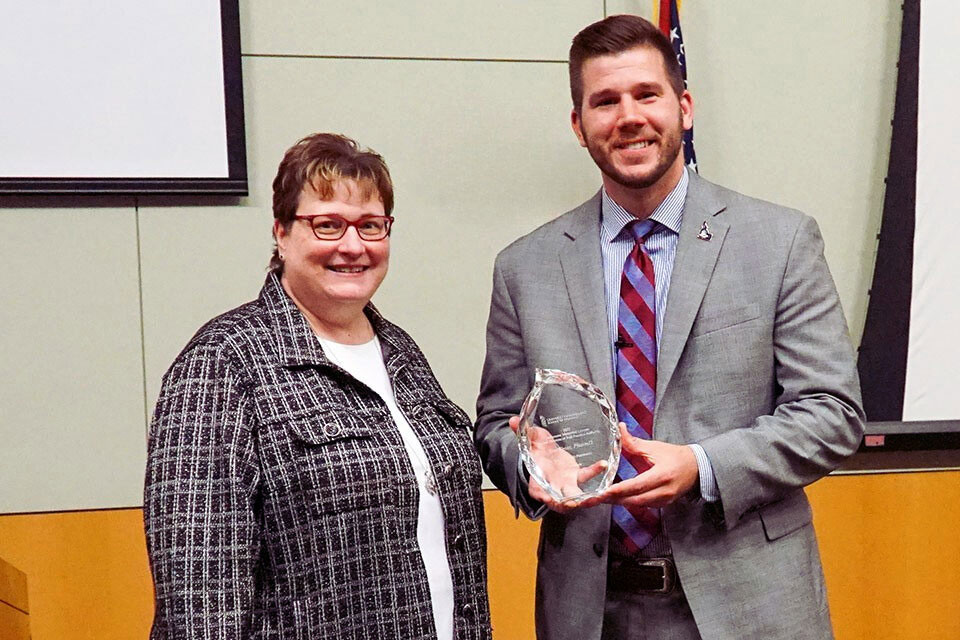
UMSOP Hosts Francis S. Balassone Memorial Lecture on Pharmacist Full Practice Authority
December 9, 2025
Expanding pharmacists’ roles through independent authority and innovative regulatory frameworks can improve patient care and access.
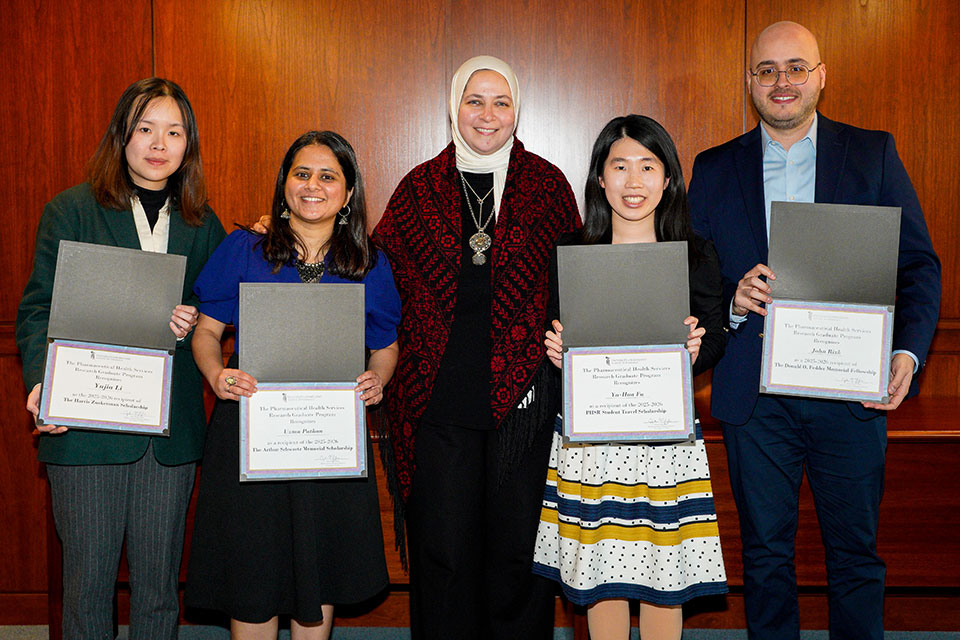
Celebrating Excellence: PHSR Graduate Students Honored at Awards Ceremony
December 8, 2025
Awards highlight the hard work, innovation, and promise of the next generation of leaders in the field.