
A World of Difference
Global rotations are widening UMSOP pharmacists’ horizons.
By Emily Bleiweis, as published in Capsule Spring 2026
June 22, 2026
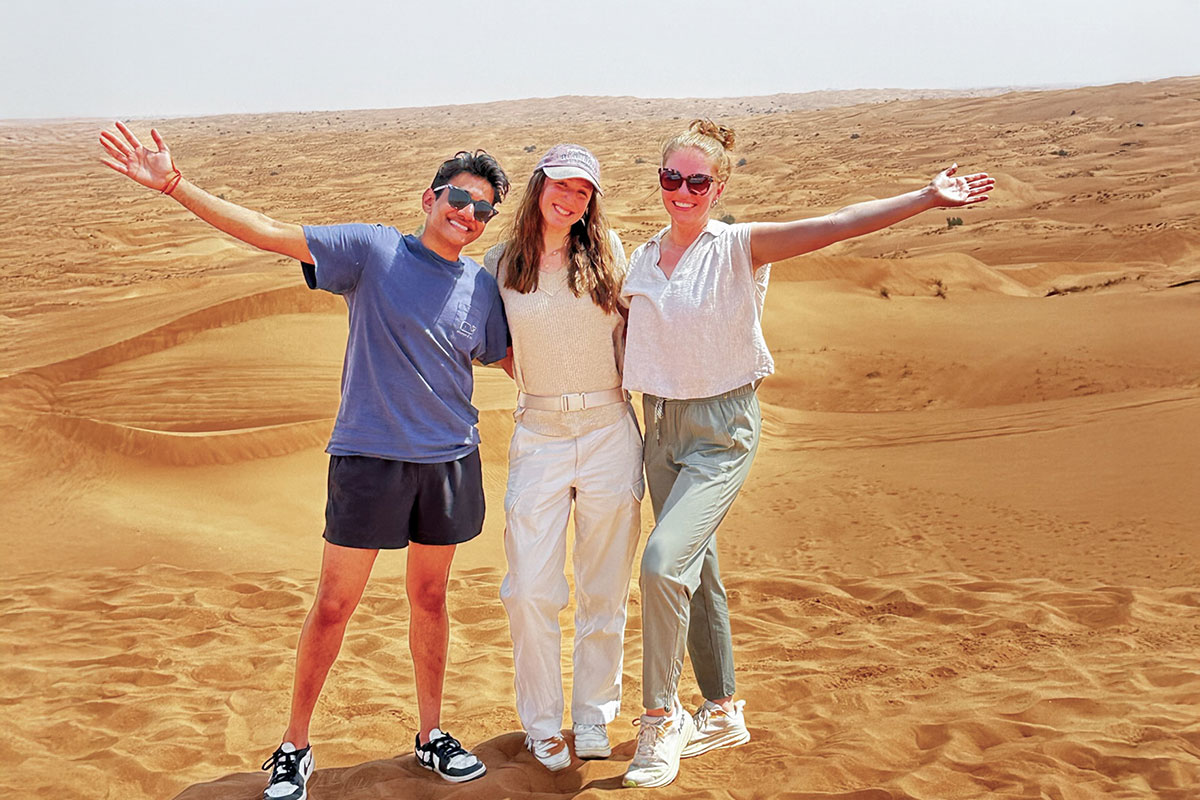
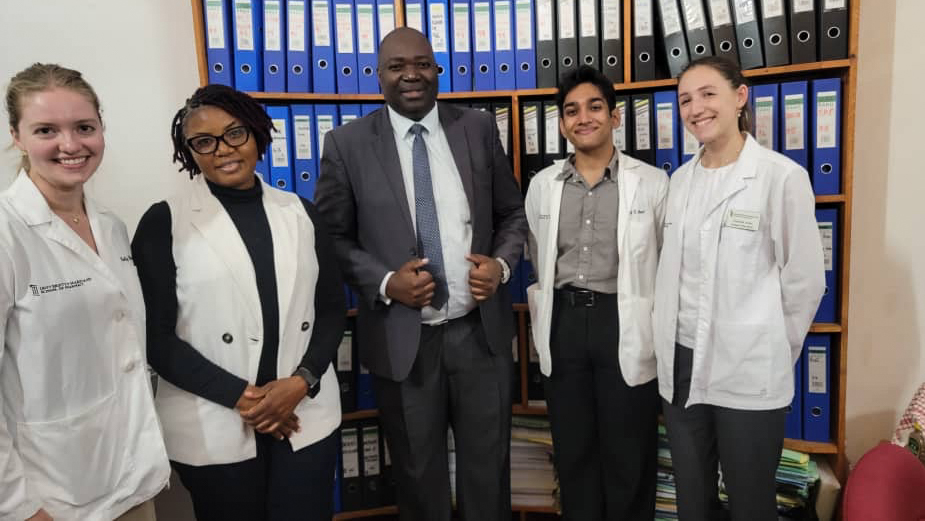
Image: Vraj Patel, left, with two colleagues in Zambia.
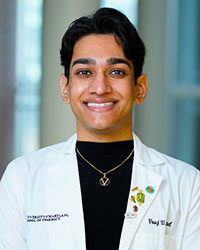
Vraj Patel
When Vraj Patel, a fourth-year PharmD student at the University of Maryland School of Pharmacy (UMSOP), traveled to Zambia, Africa, he spent four weeks at the University Teaching Hospital getting hands-on experience in a health care system that, in many ways, was quite unlike his own.
But what wasn’t different was the care and compassion needed to gain patients’ trust when treating them.
In Zambia, a lot of medications are packaged in blister packs, Patel says. Some of the biggest outliers are HIV medications, which are packaged in pill bottles. And pill bottles audibly rattle in pockets and bags.
“There’s a stigma around hearing a pill rattling in someone’s bag,” Patel says. “And so, when patients would come in, they would ask you to really pack in cotton rounds and pieces of newspaper, so … if they were walking on the street, or if they had family members that live with them, they wouldn’t hear those pills rattling.
“That served as a reminder that even in Zambia and in America, there is going to be stigma around any disease state, and we as pharmacists are trusted to keep that confidentiality and hold our patients’ trust.”
Expanding Partnerships Across the Globe
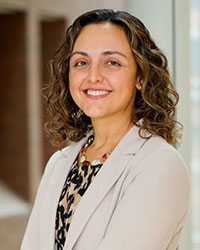
Mojdeh Heavner
Patel’s international rotation, which occurred in May and June 2025 at the start of his fourth year, allowed him to explore multiple areas in pharmacy including inpatient cardiology, infectious diseases, outpatient management of pediatric cancers, and HIV. That rotation in Zambia is one of more than half a dozen partnerships UMSOP has across the globe.
The School has partnered with universities in multiple parts of the world, including Australia, Egypt, Italy, South Korea, Thailand, and Zambia. And it’s only growing.
“Hardly a month goes by without the Experiential Learning Program (ELP) receiving a new inquiry from a university abroad, eager to establish a formal agreement or explore opportunities for collabora- tion and exchange,” says Mojdeh Heavner, PharmD ’08, BCCCP, FCCM, FCCP, assistant dean for experiential learning and professor in the Department of Practice, Sciences, and Health Outcomes Research (P-SHOR). UMSOP has an established international presence, and institutions are eager to work with the School, she adds.
UMSOP is always looking to grow the number of sites it partners with and grow the number of students who participate in these rotations, says Emily Heil, PharmD, MS, FIDP, BCIDP, AAHIVP, a professor in P-SHOR and the School’s global health liaison.
But part of that goal means finding a sustainable funding solution to help offset the cost of these rotations for students, Heil says, to make sure these types of opportunities are not just available, but financially viable.
“One of the barriers to equitable access to the international rotations is that they are self-pay in terms of the housing and the travel to get there,” Heil says.
Building a Framework
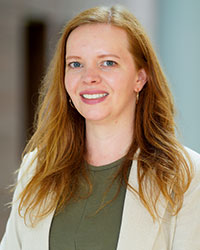
Emily Heil
Each international rotation opportunity the School provides is a bit different logistically, says Heil. But they all follow a similar structure.
Local preceptors help students find housing, such as short-term rentals like an Airbnb, as opposed to having set housing for each site.
“The preceptors are profes- sionals we know and have worked with over the years at UMSOP,” Heil says, adding “usually someone at the local pharmacy school or at the hospital that we’ve had contact with.”
The preceptors, mentors who oversee the PharmD students on their rotations, provide a key role in international experiential learning programs, and students work with them on a daily basis.
“Students are usually spending a lot of time with that person directly day-to-day — almost folding into that person’s daily job and shadowing to some extent depending on the rotation and the student’s skills and level of comfort,” Heil says. “The preceptor is coaching the student. They’re modeling what they do in their day jobs. They’re teaching the students directly through topic discussions and filling in the gaps of what the students might see when they’re spending time with that person.”
Patel’s work in Zambia taught him about foundational pharmacy — the experience was a refresher on baseline pathophysiology of disease states for him and his fellow classmates.
For example, he says, medical charting in the facilities he worked in for his rotations was done entirely on paper, something that hasn’t been done for years in the United States. This skill may seem irrelevant now, Patel says, but recently the EPIC system — which medical professionals in the United States often use to electronically record patient information — crashed, and while downtime procedures exist for hospitals for this type of scenario, the skillset of knowing how to chart on paper became a lifeline.
But more than a refresher on the basics, from a larger perspective, Patel’s rotation allowed him to see how connected public health is.
“Just getting any global experience at all will remind you that our health system is a part of something bigger,” Patel says. “We always think about us first, but we never think about the impacts that global policies have outward.”
Creating an Ambassador Program
Adds Heavner, “Experiential learning makes up more than a third of the PharmD curriculum, beginning with Introductory Pharmacy Practice Experiences [IPPE], where students explore various practice areas, and continuing with Advanced Pharmacy Practice Experiences [APPE], which help them solidify their career interests. During their fourth year, students complete eight five-week APPE rotations, including required experiences in community, ambulatory care, acute care, health systems, and patient care, along with elective opportunities in non-patient care settings.”
The ELP team at UMSOP meets with students seven times during the third year to talk about APPE preparation. During those meetings, Heil says, they talk to students about both local, non- traditional tracks, as well as the concept of international rotations.
These are mandatory, classwide meetings, Heil says, where the team meets with the students to tell them about the different options that exist, and provide summaries of available international sites. Sometimes, she adds, they’re able to put students in contact with the international sites directly.
UMSOP is in the development phase of expanding these types of global experiences for students in a more formal way, Heil says, through a Global Ambassador Program. Students interested in global health would be able to take an interprofessional elective developed in partnership with the six other schools at the University of Maryland, Baltimore.
These global rotations provide students with hands-on experience in parts of the world often very different than the United States. The opportunities allow students the chance to think on their feet, understand how to work when there is disparity, and learn how to treat patients from different demographic, educational, and socioeconomic backgrounds.
“Our vision would be that third-year pharmacy students would take that elective, and then they would pursue an international practice experience in their fourth year,” Heil says.
“This would carve out an opportunity to learn more about interprofessional global health before they do an actual global health rotation and experience the role of a pharmacist across the world,” she adds.
For many health care professionals, their role is often predictable. But in pharmacy, what the profession looks like can vary depending on where the pharmacist practices, Heil says.
“Seeing what practice looks like in different parts of the world can help students improve their own practice in the U.S. It gives them a better understanding of the pros and cons of the U.S. health care system when they’re able to compare and contrast it with health care systems in other countries,” she says. “It also helps with cultural competency and will help them be better communicators with patients from all sorts of backgrounds.”
Students who have the chance to participate in an international rotation always describe them as life-changing, she adds.
“There’s [a lot of] personal and professional growth that can happen when you are challenged to go outside of your comfort zone, go to a completely new practice area and learn from people in places that don’t look like what you’re used to in your home country,” Heil says.
For Patel, his time in Zambia was a reminder that regardless of where in the world they’re practicing, a pharmacist’s role often is as an educator.
“Our training involves a lot of education — whether that’s educating the patient or educating health care providers — we’re just taught to be teachers,” Patel says. “And because this rotation was very patient-facing — we spent a lot of time in the outpatient HIV clinic — that was direct patient contact that would benefit any pharmacy student who wants to gain hands on-experience.”
Related News Stories
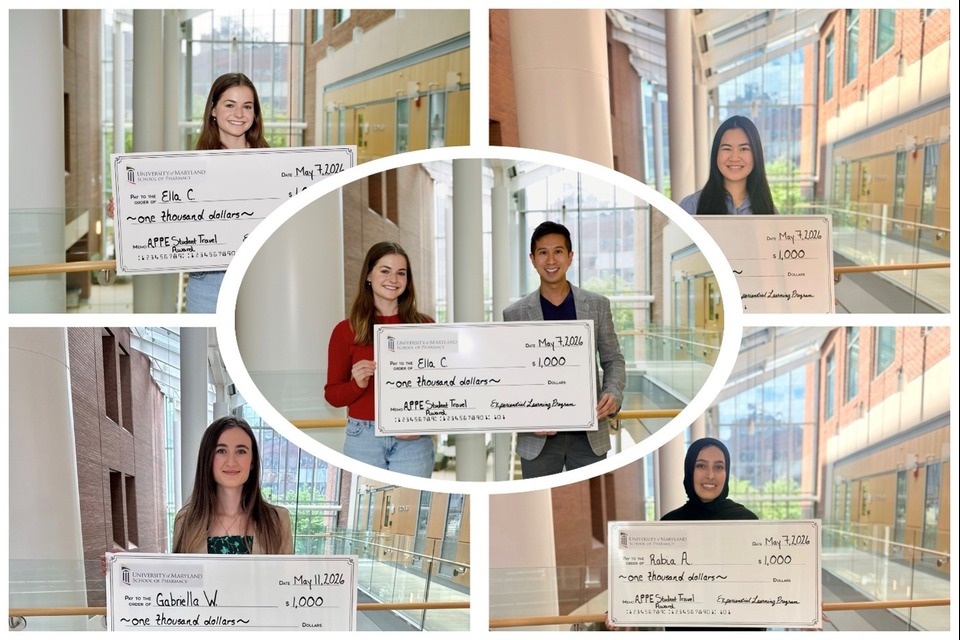
Investing in Experiences That Fuel Student Learning
July 28, 2026
The Experiential Learning Program’s new Student Support Fund opens doors for student pharmacists.
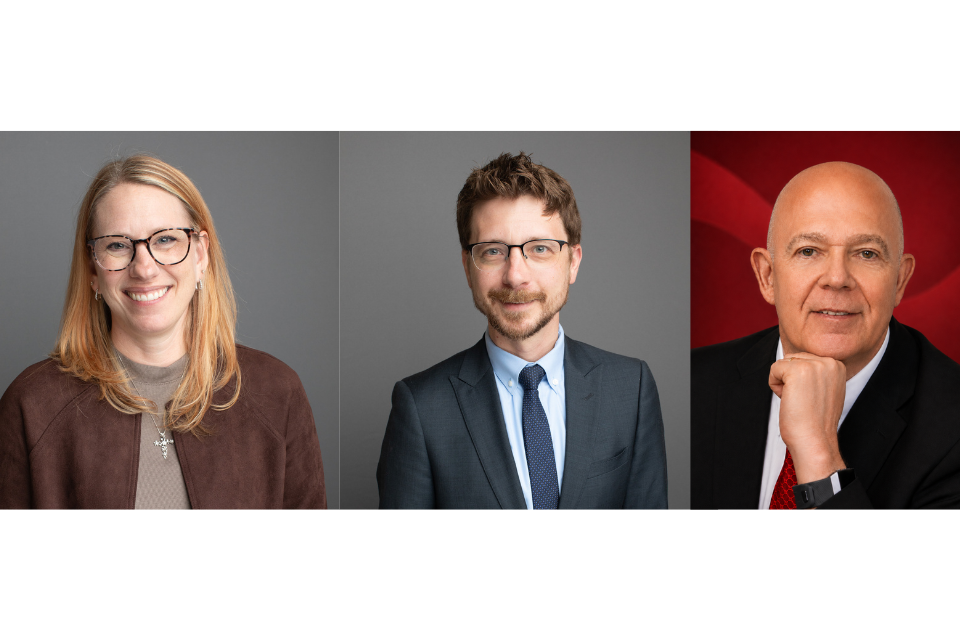
Three UMSOP Preceptors Earn Promotions
July 21, 2026
Clinical affiliate faculty serve as preceptors and earn academic advancement through teaching, scholarship, and service.
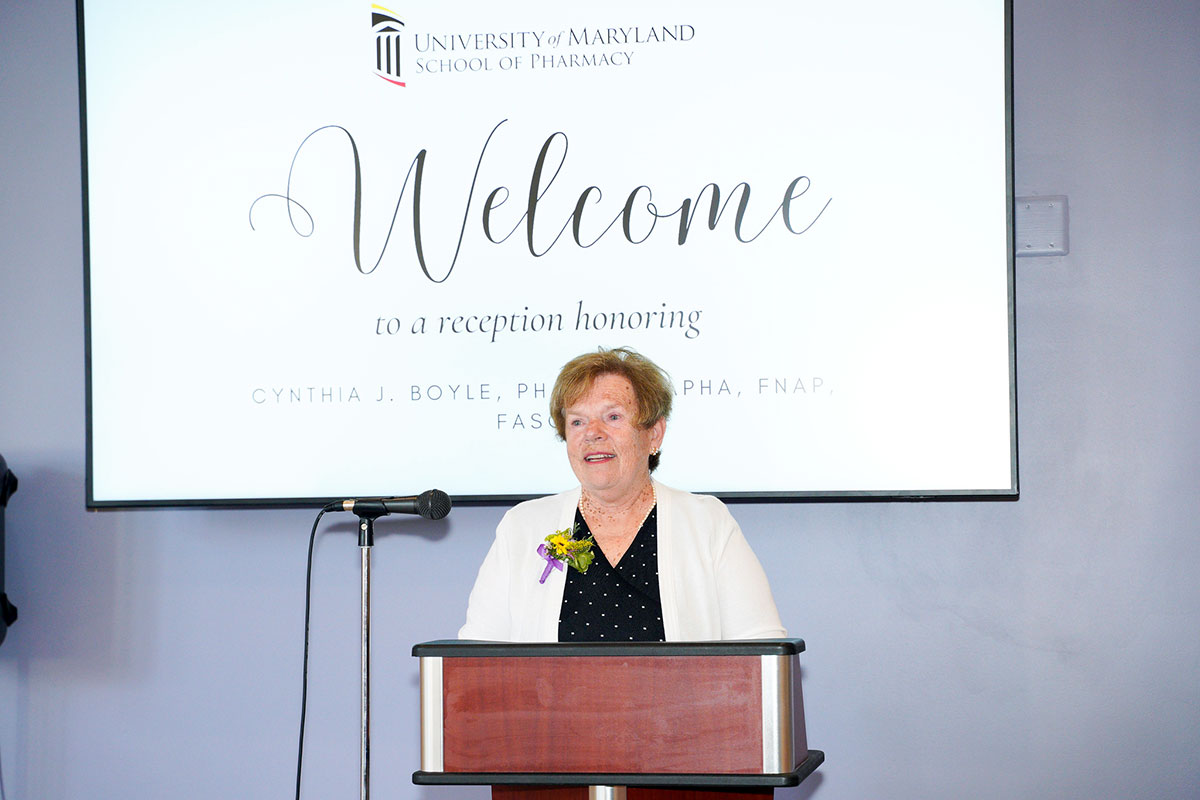
Cynthia Boyle’s Legacy Continues Through Transformational Endowment
April 27, 2026
Gift establishes the School’s first endowment supporting experiential learning and the Academy of Preceptors, ensuring lasting support for students, preceptors, and the future of pharmacy education.